
If your lawn looked thin and tired by the end of summer, you're not alone. Most St. Louis lawns are tall fescue, a cool-season grass that struggles in July and August heat and bounces back when temperatures drop.
Why fall?
University of Missouri Extension points to fall as the time to help cool-season lawns recover: core aeration, then overseeding and fertilization. Warm soil helps new seed sprout quickly, cooler air is easier on young grass, and there's less competition from summer weeds.
What aeration actually does
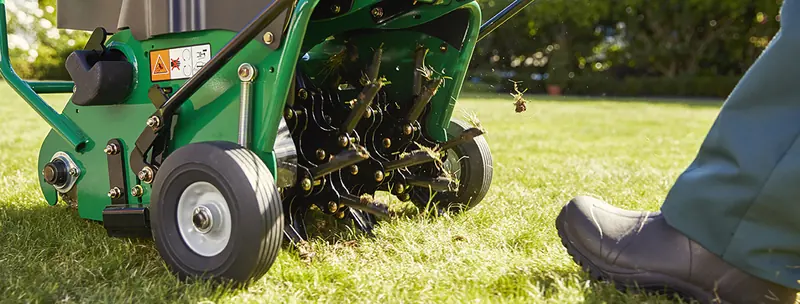
Core aeration pulls small plugs of soil out of the lawn. That loosens compacted soil, gets air to the roots, and gives water and fertilizer a direct path into the root zone. MU Extension notes that fertilizing right after aeration moves nutrients straight to where they're needed.
Overseeding fills the gaps
Seed dropped right after aeration lands in those openings and makes good contact with the soil. Over a few seasons, regular fall overseeding thickens the lawn, and a thick lawn is the best natural defense against weeds.
Our fall service
We aerate, apply a starter fertilizer and spread a quality seed matched to your lawn type. Pair it with the November winterizer from our fertilization program for a stronger start next spring.