
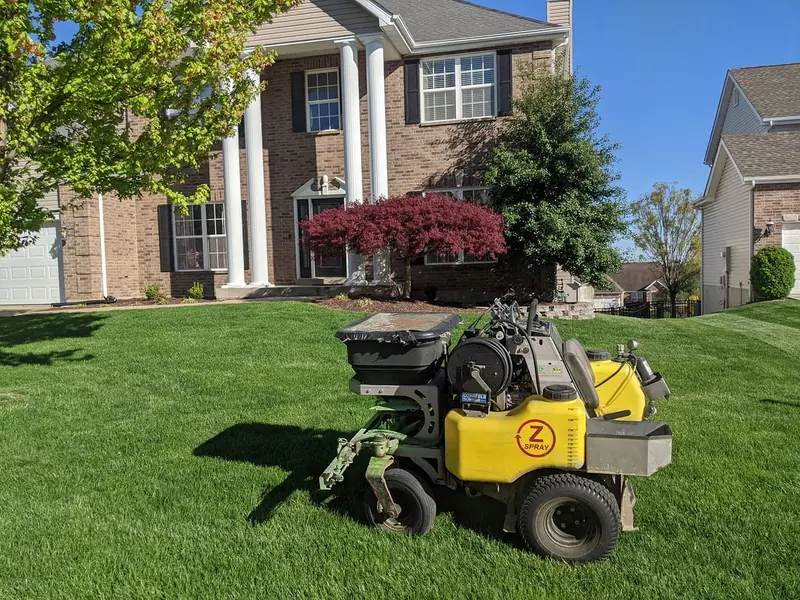
Crabgrass preventer (a pre-emergent) doesn't kill weeds you can see. It stops crabgrass seeds from sprouting in the first place. That means timing is everything: put it down too late and the crabgrass is already up; too early and it can wear off before the season is over.
Watch the soil, not the calendar
Crabgrass starts germinating once the soil warms up. University of Missouri Extension recommends waiting until soil temperature reaches about 55°F at a 2-inch depth before applying. Missouri springs swing hard between warm spells and cold snaps, so a nice week in early March doesn't always mean it's time.
The forsythia rule
A handy shortcut from MU Extension: "Be mellow until the forsythia turns yellow." When forsythia shrubs bloom, soil temperatures are usually right for crabgrass preventer.
Why we do two rounds
In the St. Louis area, the first application typically goes down in March, with a second round about six weeks later. The second round extends protection through late spring, when crabgrass is still trying to come up in thin spots.
Don't seed and pre-emerge at the same time
Most crabgrass preventers also stop grass seed from sprouting. If you have bare spots you want to seed, plan for fall aeration and overseeding instead, or talk to us about timing.